A New Rose Bed for 2026
Throughout the summer, I pick flowers from the garden to place on every table in the cafe. The summer of 2025, however, proved particularly challenging. While the sweet peas performed exceptionally well-covered in flowers for several weeks – they then stopped abruptly. The annuals, planted to bridge the gap before the autumn perennials emerged, struggled badly. With no ability to water the garden and increasingly hot, dry weather week after week, a significant flowering gap developed.
Rose Bed
To address this, we turned our attention to a small area of the garden that had once been used as display beds when we held the National Collection of Pulmonaria. More recently, it had become an unloved and weedy patch. From this, a new plan emerged: the creation of a dedicated rose bed.
I have never grown large numbers of roses, so this felt like an opportunity to design an area specifically for cutting. The roses selected needed to be repeat flowering, highly fragrant, and in shades of pink and purple. I have long disliked hybrid tea roses – perhaps influenced by my childhood spent in a garden dominated by large, park-like beds of them, pruned severely and heavily manured, leaving them uninspiring for much of the year.
So, with space for fourteen roses, I chose predominantly varieties that fall within the ‘Old Rose’ category.
Rose Varieties
What follows is the result of several days spent researching descriptions and sourcing suitable plants.
Chartreuse de Parme and La Rose du Petit Prince are both Delbard roses, about which I initially knew little. Bred in France by the Delbard family, who began their work in 1935, these roses were developed with an emphasis on strength and fragrance – qualities central to my selection.
Amande Patermotte and Quatre Saisons are Damask roses, believed to have been brought to Britain from Damascus during the Middle Ages. They were used in the production of attar of roses in the eighteenth century. Quatre Saisons, meaning “four seasons,” was the only known repeat-flowering Damask rose, producing a second flush in autumn. These roses contributed to the development of Portland and Bourbon roses. During a visit to Iran, we saw vast fields of roses grown for rose water and oil production, where their extraordinary fragrance was unmistakable.
Rose du Maitre d’Ecoie is a Gallica rose, cultivated by the Greeks and Romans and later used extensively by Dutch breeders in the seventeenth century. Originating from Turkey, Gallicas are often referred to as Apothecary Roses, reputed for their medicinal properties. They are compact, low-growing, lightly thorned, and inclined to sucker. We already have extensive plantings of Rosa mundi in the garden demonstrating these traits.
Comte de Chambord and Indigo are Portland roses, first grown by the Duchess of Portland in the early nineteenth century. Originally red in colour, they were quickly adopted by breeders and used extensively in the development of Hybrid Perpetual roses. Notably, there are no white or yellow Portland roses.
Hermosa is a China rose, also known as a Bengal rose, native to south-west China. These roses are renowned for their repeat flowering and compact habit and are ancestors of many modern hybrid roses.
Cornelia and Felicia are Hybrid Musk roses. Although not strictly classed as old roses, they were bred by the Pemberton family in the early twentieth century. They are vigorous, floriferous, disease-resistant, and possess the characteristic flower form and fragrance associated with older rose varieties.
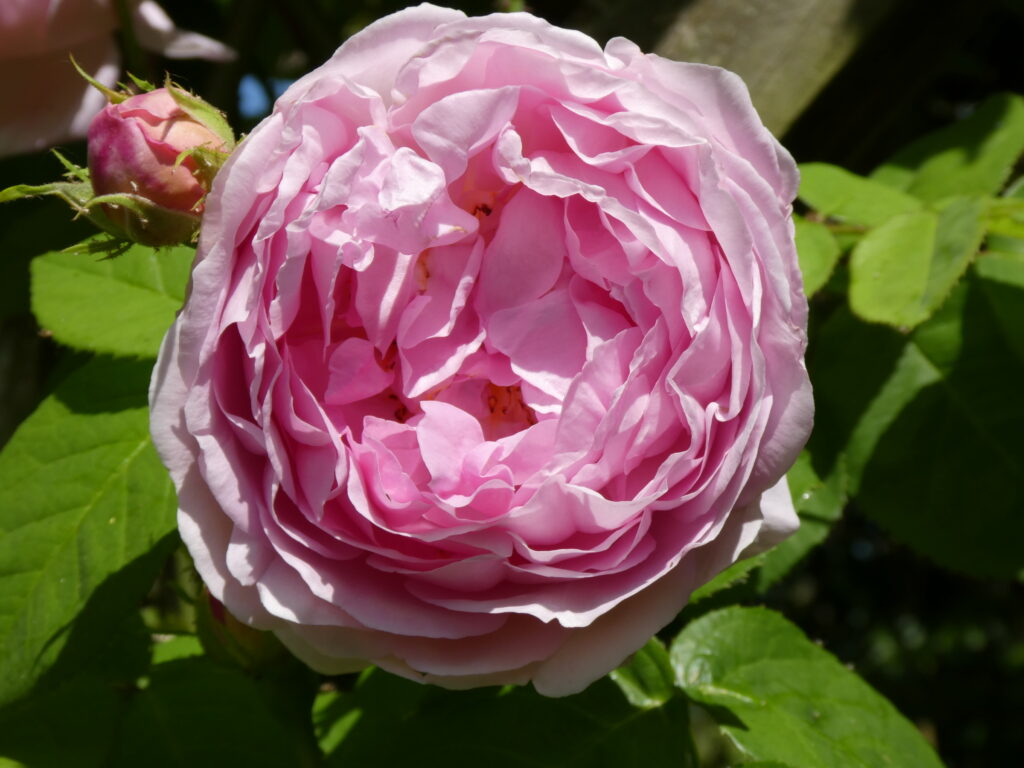
Aphrodite, Earth Angel, Lady Mary Fitzwilliam, and Sidonie do not fall neatly into these historical categories but were selected for their flower form and colour. All are repeat flowering and richly scented.
The edge of the bed will be planted with named Pulmonaria – thirty in total – to provide early interest when the roses are still dormant. Geraniums and other suitable perennials have been planted beneath the roses, with snowdrops added to ensure even earlier seasonal interest.
I hope this new rose bed will offer visitors an engaging and rewarding area to explore and that they will enjoy both the beauty and the fragrance of the flowers throughout the season.